How THEY Reshaped Queer History in Africa and Why It Still Matters Today
Understanding the history many people inherited and the history many people never received
Conversations surrounding sexuality in Black communities often begin with a familiar statement:
"Being gay isn't African."
For many people, the phrase feels historical. It is repeated with certainty and often framed as a defense of culture, values, tradition, or identity. Over time, repetition can make ideas feel ancient, even when the history beneath them becomes more complicated.
A different question changes the conversation entirely:
What if some of the beliefs people defend as tradition were themselves inherited from somewhere else?
Long before European powers drew borders across the continent, introduced colonial legal systems, and spread imported religious frameworks, Africa was already home to thousands of cultures, languages, and social systems. Human beings were already forming relationships, building families, developing communities, and creating different understandings of identity and belonging.
Human diversity did not suddenly appear after colonization.
The question is whether parts of that diversity became harder to recognize after colonization changed the systems surrounding it.
Before Erasure
Many people encounter the idea of precolonial African queerness with immediate skepticism. The reaction is understandable because most people were never introduced to Africa through that lens. The images many of us inherited emphasized strength, tradition, spirituality, family structures, resistance, and masculinity. While none of those ideas are inherently inaccurate, the picture often felt incomplete. Entire groups of people appeared to be absent from the story.
The result is that many people grew up believing that queerness and Blackness developed separately from one another. Blackness was treated as ancestral and rooted. Queerness was treated as something that arrived later, often framed as foreign influence or modern culture. Once that narrative settles into public consciousness, many people stop questioning it because it begins to feel historical even when the history itself becomes more complicated.
Historical records across several African societies suggest that human diversity existed long before colonial governments introduced legal codes and imported moral systems. The importance of these examples is not that they prove Africa functioned as a single queer-affirming society. Africa contained thousands of communities with different beliefs and social structures. The significance is that they challenge the assumption that same-sex intimacy, fluidity, or gender diversity simply did not exist.
Among the Hausa of West Africa, historical accounts describe communities known as Yan Daudu. Individuals assigned male at birth sometimes occupied social spaces and roles that existed outside later imported ideas of strict masculinity. Reading that description in a history text can feel distant until the social reality underneath it is considered more closely. A person's existence within a community was often understood through role, contribution, kinship, and social position. The question may not have begun with What are you? in the way many people understand identity today. The question was more likely connected to belonging and place.
Historical records among the Azande of Central Africa describe relationships between men involving emotional and physical intimacy within certain social structures. Human beings have always formed bonds and searched for closeness. The larger question involves the meaning attached to those relationships by the surrounding society. Modern people often encounter sexuality as a category before they encounter it as a human experience. Earlier social systems sometimes approached people through a different sequence: person first, category later.
The meaning attached to intimacy itself also changes across cultures. In several parts of Africa, forms of nonsexual affection between men historically looked very different from what many people raised in Western contexts might expect. Men holding hands while walking, sitting closely together, leaning on one another, or openly expressing closeness did not automatically function as declarations of sexual identity. The behavior itself remained the same. The social meaning surrounding it changed.
That distinction matters because it reveals how deeply culture shapes interpretation. Many people inherit the belief that physical or emotional closeness between men should immediately trigger questions or suspicion. Other communities have approached those same behaviors as ordinary expressions of trust, friendship, and connection.
The possibility that feels difficult for many readers to process may not be that forms of fluidity existed. The possibility creating tension is considering that aspects of human diversity may have existed without carrying the same inherited weight of fear and contradiction many people experience today.
What Was Lost?
The historical examples themselves are important, but the larger point may not be the examples at all. The larger point may be what happened after them.
Many bi+ Black men grow up inheriting a very specific understanding of masculinity. Emotional closeness between men can trigger suspicion. Tenderness sometimes becomes associated with weakness. Attraction outside rigid expectations can quickly become attached to shame, conflict, or confusion.
Those ideas often feel ancient because they were inherited through families, institutions, religious spaces, and community narratives repeated across generations. Repetition has a way of making social expectations feel natural. A belief does not have to be old to feel permanent.
That raises an uncomfortable question. If different social systems had remained dominant and continued evolving over time, what expectations would Black men have inherited instead?
Perhaps emotional closeness between men would not automatically create tension. Perhaps masculinity would feel less dependent on distance and restriction. Perhaps attraction itself would not immediately become a category demanding explanation.
No one can know exactly what that world would look like. History cannot provide a map for a reality that never happened. Still, the question matters because it reveals something many people rarely stop to consider.
Some of the pressures people experience today may not be inevitable. Some pressures may simply be inherited.
How Colonial Systems Narrowed Human Possibility
Colonialism reshaped more than governments and borders. European powers introduced legal systems, religious frameworks, and social expectations that often reflected Victorian ideas surrounding sexuality and gender. Behaviors and identities that may have been understood differently within local communities became increasingly filtered through imported ideas of morality.
Some colonial laws criminalizing same-sex relationships remained in place long after nations gained independence. In several countries, versions of those laws still exist today. Over time, beliefs repeated through institutions, schools, governments, and faith communities can begin to feel natural even when their origins are relatively recent.
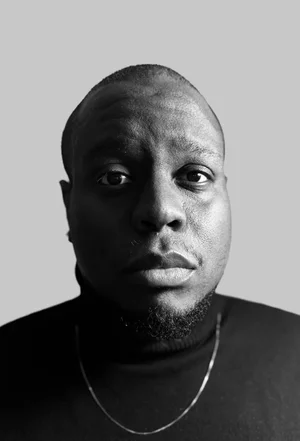
My name is Robert Saint Michael, and I am a Behavioral Health Strategist and founder of Bi+ Black Men. Through building this community and listening to conversations surrounding identity, masculinity, relationships, and belonging, one pattern continues appearing: people often inherit expectations long before they inherit context. Many of us receive ideas about masculinity and sexuality before we ever receive the history explaining where those ideas came from.
Communities often inherit values, but they can also inherit silence. Sometimes what disappears from history shapes people as much as what remains.
The Problem With Erasure
History becomes smaller when human experiences are forced into rigid categories. That narrowing may help explain why bi+ men often find themselves occupying a unique position within conversations surrounding sexuality.
Bi erasure is commonly described as the dismissal or invalidation of bisexual experiences. Sometimes it appears directly through statements suggesting bisexuality does not exist. Other times it appears more subtly through assumptions that attraction must eventually resolve into a single destination. People are often expected to choose a side or become easier for others to understand.
The contradiction becomes difficult to ignore. Much of the history explored throughout this article suggests that human relationships and forms of intimacy did not always operate through rigid identity systems. Historical examples from different African societies reveal people moving through relationships and social roles that resist simple classification.
This does not mean ancient communities understood people as bisexual in the way the term exists today. The language itself did not yet exist. The larger point is that human complexity existed before many of the categories later used to organize it.
The possibility becomes difficult to dismiss: perhaps fluidity itself was never the contradiction people inherited.
Perhaps the contradiction was expecting human beings to fit perfectly into narrow definitions.
This tension begins approaching another conversation that many Black communities know intimately: spirituality.
The Black church has long served as a place of survival, resistance, strength, and community for generations of Black people. Its role within Black history cannot be separated from collective struggle. At the same time, some of the religious frameworks inherited through colonial history developed alongside imported ideas surrounding sexuality and morality.
Long before those systems arrived, spiritual traditions across parts of Africa often approached life through relationships involving ancestry, community, ritual, and social responsibility. The relationship between spirituality and identity was not always organized through the same boundaries many people recognize today.
That history raises another question worth exploring:
If some of the spiritual systems shaping Black communities were themselves shaped through colonial history, what parts of older understandings were left behind?
References
Epprecht, M. (2008). Heterosexual Africa? The History of an Idea from the Age of Exploration to the Age of AIDS. Ohio University Press.
Murray, S. O., & Roscoe, W. (1998). Boy-Wives and Female Husbands: Studies in African Homosexualities. St. Martin’s Press.
Tamale, S. (Ed.). (2011). African Sexualities: A Reader. Pambazuka Press.
Tamale, S. (2013). Exploring the Contours of African Sexualities: Religion, Law and Power. African Human Rights Law Journal, 13(1), 150–177.
Amadiume, I. (1987). Male Daughters, Female Husbands: Gender and Sex in an African Society. Zed Books.
Evans-Pritchard, E. E. (1970). Sexual Inversion among the Azande. American Anthropologist, 72(6), 1428–1434.
Human Rights Watch. (2023). This Alien Legacy: The Origins of “Sodomy” Laws in British Colonialism.
United Nations Development Programme. (2022). Legal and Social Inclusion Reports on LGBTQ Communities.
American Psychological Association. (2023). Sexual Orientation and Identity Resources.
About the Author
Robert Saint Michael is a Behavioral Health Strategist and founder of Bi+ Black Men, a community initiative focused on creating safe, culturally grounded spaces for bi+ Black men through dialogue, education, and shared experience. His work explores the intersection of identity, masculinity, relationships, behavior, and community, with an emphasis on context over judgment and understanding over labels.
Robert Saint Michael writes on topics involving Black identity, stigma, sexuality, social systems, and lived experience through both Bi+ Black Men and The Human Mile.
LEARN MORE —> Robert Saint Michael — Behavioral Health Strategist